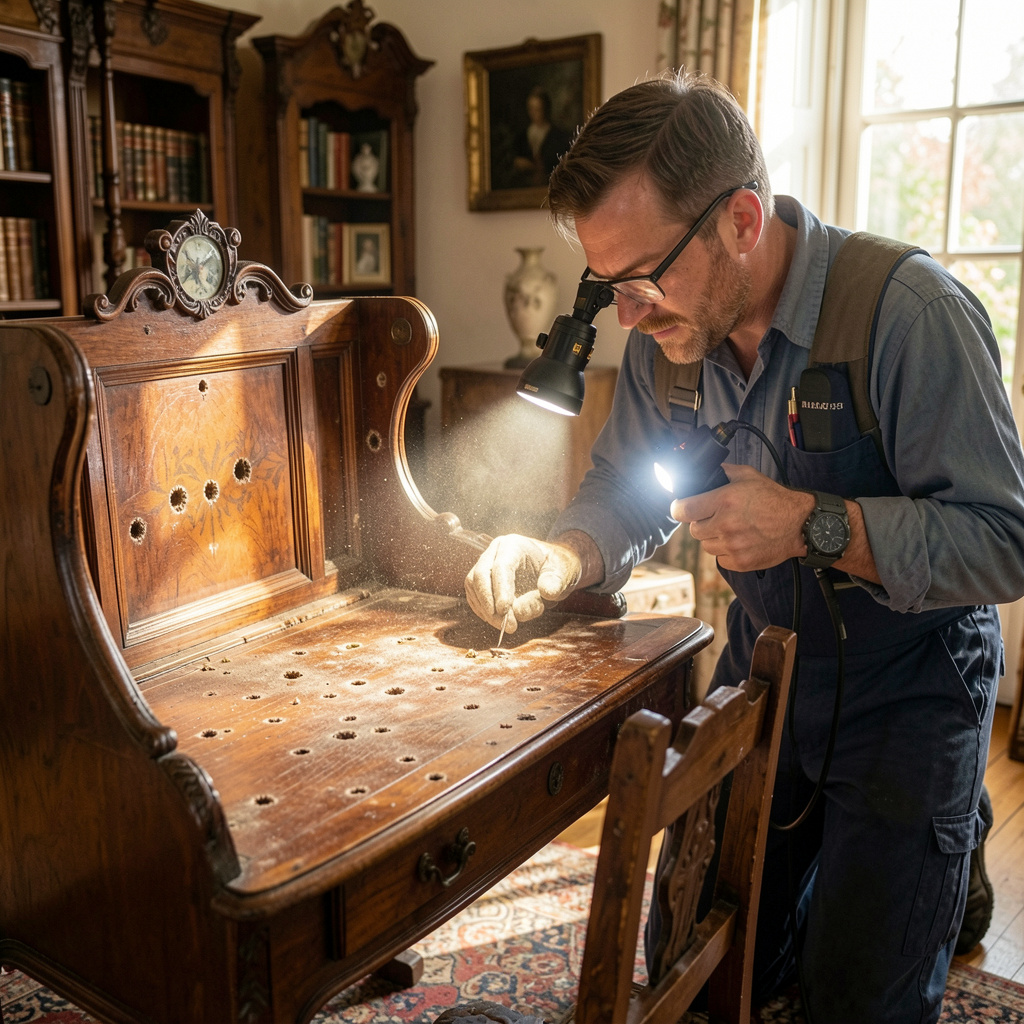
Can Woodworm Spread from Furniture to Structural Beams?
Finding woodworm in a treasured antique chair or vintage wardrobe can be alarming, but many homeowners quickly ask an even bigger question: Can woodworm spread from furniture to structural beams? The answer is yes—but only under the right conditions.
Unlike termites, which travel in large colonies and rapidly invade wooden structures, woodworm spreads through the natural life cycle of wood-boring beetles. Adult beetles emerge from infested timber, mate, and lay eggs on other suitable wooden surfaces. If your home’s structural beams provide the right environment, they can become the next target.
The good news is that woodworm spreads relatively slowly, giving homeowners time to detect and treat an infestation before it causes serious structural damage. Understanding how woodworm spreads, what signs to watch for, and how to prevent it can help protect both your furniture and your home.Further Reading: https://www.shashel.eu official site for microwave woodworm treatment equipment.
What Is Woodworm?
Despite the name, woodworm is not actually a worm. The term refers to the larvae of several species of wood-boring beetles that feed on timber during their immature stage.
The most common species found in European homes include:
- Common Furniture Beetle (Anobium punctatum)
- Deathwatch Beetle (Xestobium rufovillosum)
- House Longhorn Beetle (Hylotrupes bajulus)
- Powderpost Beetles (Lyctus species*)
Adult beetles lay eggs in tiny cracks, crevices, or old exit holes in wood. Once the eggs hatch, the larvae tunnel through the timber while feeding, often remaining hidden for two to five years, depending on the species.
Most of the damage occurs during this larval stage, long before the adult beetles emerge.
How Does Woodworm Spread?
One of the biggest misconceptions is that woodworm “crawls” from one piece of wood to another. In reality, the larvae stay inside the wood where they hatch.
The spread occurs through the adult beetles.
The process follows these steps:
- Larvae develop inside infested furniture.
- Adult beetles emerge through small exit holes.
- The beetles mate during spring or summer.
- Female beetles search for suitable timber.
- Eggs are laid on nearby wooden surfaces.
- New larvae hatch and begin feeding inside the new timber.
If structural beams are close to infested furniture and the conditions are favorable, a new infestation can begin.
Can Furniture Infest Structural Beams?
Yes. If furniture with an active woodworm infestation is kept near exposed structural timber, adult beetles may lay eggs on nearby beams, joists, rafters, or floorboards.
For example, an infested antique wardrobe stored in a loft may expose:
- Roof beams
- Ceiling joists
- Floor joists
- Wooden trusses
- Timber wall framing
However, this doesn’t mean every piece of nearby wood will become infested. The beetles are selective and prefer timber that offers the right conditions for their larvae to survive.
What Makes Structural Beams Attractive?
Several factors increase the likelihood that wood-boring beetles will choose structural timber.
Damp Wood
Moisture is one of the biggest contributors to woodworm infestations.
Roof leaks, plumbing problems, condensation, and poor ventilation create ideal breeding conditions.
Dry timber is generally much less attractive.
Untreated Timber
Older homes often contain untreated beams that lack modern protective preservatives.
Historic properties are particularly vulnerable.
Existing Cracks and Holes
Adult beetles prefer laying eggs in:
- Natural cracks
- Joints
- Old exit holes
- Rough timber surfaces
These openings protect the eggs until they hatch.
Suitable Wood Species
Some beetles prefer softwoods like pine and spruce, while others attack hardwoods such as oak.
The timber type influences whether structural beams are suitable for infestation.
How Long Does It Take for Woodworm to Spread?
Woodworm spreads much more slowly than termites.
Once eggs are laid, the larvae remain hidden inside the wood for several years before emerging as adult beetles.
A newly infested beam may show no visible signs for two to five years, depending on:
- Beetle species
- Temperature
- Humidity
- Timber type
This slow life cycle means that infestations often develop unnoticed until visible exit holes appear.
Signs That Woodworm Has Spread
If you already know furniture is infested, inspect nearby structural timber for these warning signs.
Fresh Exit Holes
Small round holes measuring approximately 1–3 mm in diameter are one of the clearest indicators of woodworm activity.
Fresh holes have clean, light-colored edges.
Powdery Frass
Woodworm larvae produce a fine powder called frass as they feed.
Fresh frass is:
- Cream-colored
- Dry
- Similar to fine sawdust
Repeated appearance of frass after cleaning often indicates active infestation.
Weak Timber
As larvae tunnel through beams, the timber may become:
- Soft
- Brittle
- Hollow-sounding
- Easy to crumble
Adult Beetles
Small brown beetles emerging indoors during late spring and summer often indicate active woodworm nearby.
Which Areas of the Home Should You Check?
When furniture contains woodworm, inspect surrounding timber carefully.
Priority areas include:
- Loft beams
- Roof rafters
- Ceiling joists
- Floorboards
- Staircases
- Window frames
- Basement timbers
- Wooden partitions
- Garage roof structures
- Timber sheds
Regular inspections help identify new infestations before significant damage occurs.
Can Woodworm Spread Through the Entire House?
In most cases, woodworm spreads gradually rather than rapidly.
Adult beetles usually fly only short distances indoors before laying eggs.
Because of this, infestations often remain localized unless:
- Multiple untreated timber surfaces are available.
- Moisture problems remain unresolved.
- The infestation goes untreated for many years.
Early treatment greatly reduces the likelihood of widespread infestation.
How to Prevent Woodworm from Spreading
Preventive maintenance is the best defense.
Inspect Wooden Furniture
Check antique furniture several times each year for:
- Exit holes
- Frass
- Loose joints
- Soft wood
Control Moisture
Repair:
- Roof leaks
- Plumbing leaks
- Condensation problems
Maintain good ventilation throughout the home.
Treat Active Infestations Promptly
If woodworm is confirmed, treat affected furniture before adult beetles have the opportunity to reproduce.
Apply Wood Preservatives
Suitable timber treatments help reduce the risk of future infestations, particularly on exposed structural wood.
Schedule Regular Timber Inspections
Older homes benefit from periodic professional inspections, especially in roof spaces and basements.
What Should You Do If You Suspect the Spread?
If you believe woodworm has spread from furniture to structural beams:
- Inspect all nearby timber carefully.
- Clean away any existing dust.
- Monitor for fresh frass or new exit holes.
- Photograph suspicious areas for future comparison.
- Arrange a professional timber inspection if structural beams are involved.
Prompt action can prevent costly structural repairs.
When Should You Call a Professional?
Professional assistance is recommended if:
- Structural beams show signs of weakening.
- Fresh frass continues to appear.
- New exit holes develop each season.
- Multiple wooden areas are affected.
- Timber feels soft or unstable.
- You’re unsure whether the infestation is active.
A timber preservation specialist can identify the beetle species, assess the extent of the damage, and recommend the most effective treatment.
Common Myths About Woodworm Spread
Myth 1: Woodworm Crawls from One Piece of Wood to Another
False. The larvae remain inside the wood. Only the adult beetles move to lay eggs elsewhere.
Myth 2: Every Infested Piece of Furniture Will Spread Woodworm
Not necessarily. Spread depends on whether adult beetles emerge, find suitable nearby timber, and successfully lay eggs.
Myth 3: Painting Over Exit Holes Stops the Infestation
No. Covering holes may improve appearance but will not eliminate larvae already inside the timber.
Conclusion
Woodworm can spread from furniture to structural beams, but the process is much slower than many homeowners expect. Instead of moving directly through timber, adult wood-boring beetles emerge from infested furniture and lay eggs on nearby untreated wood, where a new generation of larvae begins feeding.
Fortunately, regular inspections, proper moisture control, timely treatment of infested furniture, and periodic professional surveys can prevent woodworm from spreading throughout your home. By acting early, you can protect both valuable furniture and the structural timber that keeps your property safe and secure.